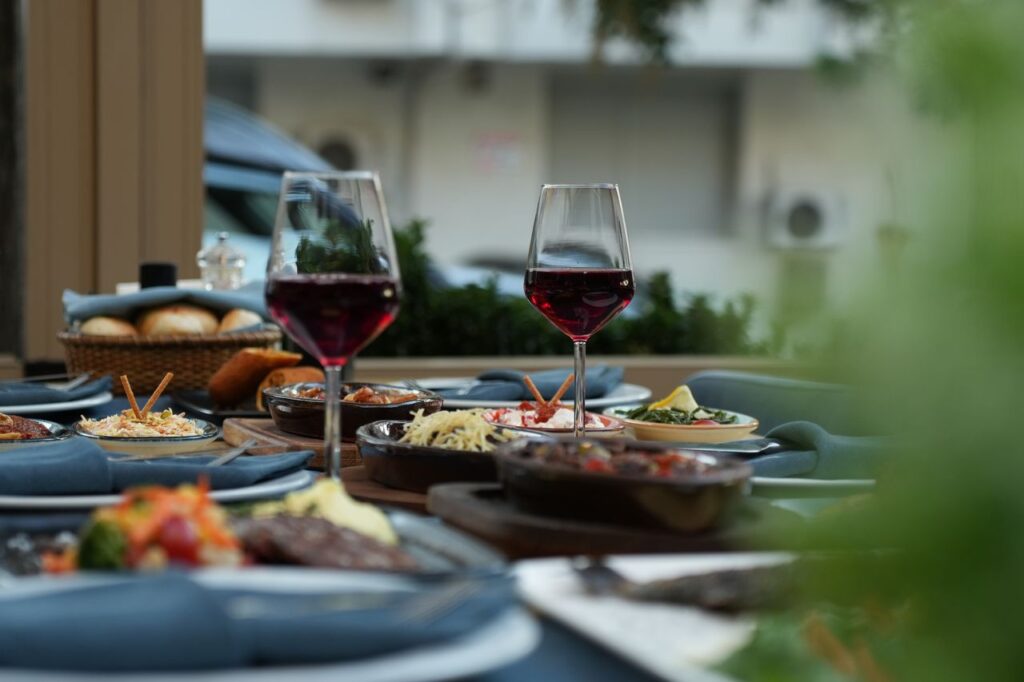
Restaurant and gastronomy searches are among the highest-volume local searches in Switzerland — and among the most dominated by “near me” queries that go directly to the businesses that appear in Google’s map pack. This guide covers exactly how SEO works for Swiss restaurants, cafés, pizzerias, and gastronomy businesses, what the Swiss market demands, and how to turn Google visibility into full tables and consistent reservations in 2026.
Why gastronomy is the most competitive local SEO sector in Switzerland
No industry in Switzerland is more dominated by “near me” searches than gastronomy. As Swiss local SEO specialists confirm, searches like “Italian restaurant Niederdorf” or “Brunch Zürich” are among the most frequent local queries in the country — and they convert at extraordinary rates because the searcher has immediate intent. They are hungry. They want to eat now or book for tonight.
According to Swiss digital marketing data, 46% of all Swiss search queries begin with local intent — and in gastronomy, that percentage is even higher. The Local Pack — the three restaurant listings Google shows with a map at the top of results — captures 44% of all clicks for restaurant searches. If your restaurant is not in those three positions, you are invisible to nearly half of all potential customers searching for exactly what you offer.
The stakes are high and the opportunity is real. A Swiss restaurant that goes from invisible to position 1 in the Google map pack for its primary cuisine and city keyword can see reservation enquiries increase by 30–60% within the first 60–90 days. For a restaurant with a CHF 60 average spend per cover and 40 covers per service, even a modest increase in occupancy from organic search translates to tens of thousands of francs in additional annual revenue.
The Swiss gastronomy SEO opportunity: A 2026 analysis of 513 Google Business Profiles across Zürich’s gastronomy sector found that 68% of Swiss SMEs — including restaurants — are giving away local visibility by not optimizing their profiles. The threshold for top placement in the Swiss local map pack is lower than in Germany or the UK. The businesses that invest in professional gastronomy SEO now face less optimized competition than they would in almost any other major European market.
What makes restaurant SEO different from other local SEO in Switzerland
Restaurant SEO has specific characteristics that set it apart from other local business categories — and understanding these differences is essential for building a strategy that actually fills tables rather than just generating impressions.
The menu is SEO content
In most local businesses, the website’s written content is secondary to the Google Business Profile. In a restaurant, the menu is the most important document on the site from an SEO standpoint. A well-structured HTML menu with Restaurant and Menu schema markup, dish names as headings, ingredient descriptions, and prices tells Google exactly what cuisine you offer — and enables it to display that information directly in search results before a user even clicks through to your site.
Swiss restaurants that publish their full menu on their website in HTML format — not as a PDF, not as an image — give Google the ability to match their dishes against specific food searches. A Swiss restaurant that publishes a detailed menu with dish descriptions in German gives Google the signals it needs to rank that restaurant for searches like “Pizza Margherita Zürich”, “Spaghetti Carbonara Basel”, or “Fondue Restaurant Bern” — queries that convert directly into reservations.
Third-party platforms are ranking signals — not just reservations channels
TripAdvisor, TheFork (The Fork / LaFourchette), Google Reviews, and Yelp are not just platforms where Swiss diners leave reviews. They are high-authority citation sources that Google uses to evaluate your restaurant’s credibility, relevance, and prominence. A restaurant absent from these platforms signals to Google that it may not exist within the digital gastronomy ecosystem — regardless of how well-optimized its own website is.
The Swiss-specific platforms that matter most for restaurant citation building are TripAdvisor Switzerland (tripadvisor.ch), TheFork Switzerland, local.ch (which has a strong restaurant directory), and Google Business Profile. Consistent and complete presence across all four, with matching name, address, phone number, and opening hours, is foundational to Swiss restaurant local SEO.
Near-me searches dominate — and they are won on Google Business Profile
“Restaurant near me”, “Pizzeria in meiner Nähe”, “Restaurant Zürich offen jetzt” — these searches happen millions of times per month across Switzerland and they are won or lost entirely on the strength of the Google Business Profile, not the website. Swiss diners searching for a restaurant in real time are making decisions in seconds based on what they see in the map pack: the photos, the rating, the opening hours, and the distance.
The highest-value SEO opportunities by gastronomy category
Pizzerias
One of the highest-volume restaurant categories in Swiss local search. “Pizza Zürich”, “Pizzeria Basel”, “Pizza Lieferdienst Bern” generate consistent high-intent searches. Neapolitan pizza (“Pizza Napoletana Zürich”) is a growing niche with premium positioning and lower competition than generic pizza searches.
Italian Restaurants
The most popular cuisine category in Swiss restaurant searches. Highly competitive in city centers but achievable at district level. Key keywords: “Italienisches Restaurant Zürich”, “Ristorante Italiano Basel”, “Restaurant Italiano Bern”. Quality photos of pasta dishes and interior are essential for map pack CTR.
Grills & Steakhouses
High average spend per cover — CHF 80–150+ — makes SEO ROI extremely strong. Swiss diners research steakhouse options more carefully before booking than casual dining. Content covering meat sourcing, cut options, and pricing performs well for both SEO and conversion.
Cafés & Brunch
Strong weekend search volume. “Brunch Zürich”, “Café Basel Samstag”, “Frühstück Restaurant Bern” drive significant traffic. Instagram-worthy interior and food photography are conversion-critical for this category — professional photos on Google Business Profile directly increase click-through rates.
Asian Cuisine
Fast-growing category in Swiss urban markets. Japanese, Thai, and Vietnamese cuisines perform particularly well in Zürich and Basel. Cuisine-specific keywords (“Sushi Restaurant Zürich”, “Thai Restaurant Basel”) have strong commercial intent and manageable competition.
Traditional Swiss Cuisine
Fondue, Raclette, and Rösti restaurants attract both local and tourist searches. “Fondue Restaurant Zürich”, “Raclette Restaurant Basel” are high-value keywords with strong seasonal peaks. Tourist-driven searches often happen without a specific city — “best fondue restaurant Switzerland” — making national content valuable alongside local optimization.
Google Business Profile optimization for Swiss restaurants
For restaurants in Switzerland, the Google Business Profile is the single most important SEO asset — more important than the website for most local searches. Google Business Profile is by far the largest Local Pack ranking factor at 32%, followed by reviews at 20%. A complete, optimized, actively managed profile is not optional — it is the foundation that everything else builds on.
Complete profile setup for Swiss restaurants
- Primary category: Choose the most specific category available — “Pizza Restaurant” rather than “Restaurant”, “Neapolitan Restaurant” if available, “Café” rather than “Food”. Secondary categories should cover all relevant cuisine types and service modes (delivery, takeaway, dine-in).
- Business description: Write a 750-character description in German (primary) that naturally includes your cuisine type, location (city and district), what makes your restaurant distinctive, and key service details (reservations, groups, dietary options). Avoid keyword stuffing — write for the diner, not the algorithm.
- Photos — quantity and quality matter: Profiles with 15+ high-quality photos receive 42% more requests for directions than those with fewer. Upload photos of your signature dishes, interior ambiance, exterior, team, and the dining experience. Update with seasonal dishes and special events regularly.
- Menu integration: Add your menu directly to your Google Business Profile. Google can display menu items directly in search results, increasing click-through rates significantly. If you update your menu seasonally, update the GBP menu simultaneously.
- Attributes: Complete all relevant attributes — outdoor seating, vegetarian options, vegan options, gluten-free options, reservations, delivery, takeaway, Wi-Fi, parking. Swiss diners filter by these attributes when searching.
- Posts: Publish Google Business Profile posts at least weekly — daily specials, seasonal menus, events, and promotions. Active posting signals to Google that your business is current and engaged, which positively influences map pack rankings.
Review management strategy for Swiss restaurants
87% of Swiss consumers use Google to evaluate local businesses before visiting. For restaurants, reviews are the single most influential factor in a diner’s decision to book or walk in. A restaurant with 4.5 stars and 200 reviews will consistently outperform a restaurant with 4.8 stars and 12 reviews — because volume signals legitimacy. A review widget such as Trustindex can also show your Google reviews on your own website, so the same social proof follows diners from the map pack to your menu page.
A systematic review generation process — training staff to mention Google reviews at the end of positive dining experiences, adding a QR code linking to your review page on receipts and table cards, following up reservation bookings with a post-visit review request — can double or triple your review velocity within 60–90 days. Responding to every review, positive and negative, within 24–48 hours signals active management and builds trust with both potential diners and Google’s local ranking algorithm.
Tip: show your reviews on your website. Most diners check reviews before they book, so put them next to your menu and reservation button. Trustindex displays your Google reviews on your site automatically, so a first-time visitor sees real guests praising the food before they pick up the phone. (Affiliate link)
Swiss restaurant website SEO — what your site needs to rank
While the Google Business Profile dominates near-me searches, your website is critical for organic rankings, brand searches, and the longer research queries that higher-spending diners use when planning special occasions, business dinners, or group bookings.
Menu pages — the most important content on your restaurant website
Your menu should be published as indexable HTML text on your website — not as a PDF, not as an embedded image, not as a link to a third-party menu platform. An HTML menu with proper heading structure, dish descriptions in German, and Restaurant and Menu schema markup gives Google the ability to index your specific dishes and match them against food-specific search queries. A Swiss restaurant whose menu is only available as a PDF is invisible to Google for every dish-specific search their potential customers might make.
Schema markup for Swiss restaurants
Restaurant schema markup tells Google and AI systems exactly what your establishment offers — cuisine type, price range, opening hours, accepted payment methods, reservation policy, dietary options, and location. Combined with Menu schema (which structures your dishes, descriptions, and prices as machine-readable data), this markup enables Google to display rich results in search — including star ratings, price range, cuisine type, and opening hours directly in the search results before a user clicks through.
For Swiss restaurants targeting AI search visibility, schema markup is also the primary mechanism through which ChatGPT, Gemini, and Perplexity identify and cite specific restaurants when Swiss users ask for recommendations. A restaurant with complete schema markup is significantly more likely to be cited in AI-generated restaurant recommendations than one without it.
Location and neighborhood content
Swiss restaurant searches are intensely local — diners search not just by city but by neighborhood, district, and even street-level proximity. A restaurant in Zürich’s Kreis 4 that creates content specifically mentioning Langstrasse, the surrounding neighborhood, nearby attractions, and local landmarks captures the neighborhood-level searches that generic city-level content misses entirely.
Swiss-specific citation building for restaurants
Beyond Google Business Profile, consistent presence across Swiss-specific platforms is essential for restaurant local SEO. The platforms that carry the most weight for Swiss gastronomy citations are:
- local.ch — Switzerland’s primary business and restaurant directory; heavily weighted by Google for Swiss local rankings
- search.ch — the second major Swiss directory with a prominent restaurant section
- TripAdvisor Switzerland (tripadvisor.ch) — high authority, heavily used by both Swiss diners and tourists; essential for any Swiss restaurant targeting both local and visitor traffic
- TheFork (LaFourchette) — the dominant online reservation platform in Switzerland; presence here is both a booking channel and a citation signal
- Zomato Switzerland — food discovery platform with a Swiss presence; useful citation for urban restaurants in Zürich and Geneva
- OpenTable — particularly relevant for higher-end restaurants targeting international and business diners
NAP (Name, Address, Phone number) consistency across all platforms is critical. Swiss local SEO specialists consistently identify inconsistent NAP data as one of the most common and damaging errors in Swiss restaurant local SEO — deviating spellings between platforms confuse Google and dilute the local ranking signals that make map pack visibility possible.
GEO — AI search visibility for Swiss restaurants in 2026
A growing share of Swiss diners — particularly younger customers and those planning special occasions — are using AI tools like ChatGPT, Gemini, and Perplexity to get restaurant recommendations before they open Google. When someone asks ChatGPT “best Italian restaurant in Zürich Kreis 4” or “where to eat authentic Neapolitan pizza in Basel”, the AI provides one or two specific recommendations — not a list of ten.
Swiss restaurants that are not appearing in AI-generated recommendations are missing an increasingly significant share of high-intent discovery traffic. GEO (Generative Engine Optimization) for Swiss restaurants involves the same principles that apply across all local businesses — but with specific gastronomy-relevant elements:
- Complete schema markup — Restaurant, Menu, and AggregateRating schema give AI systems the structured data they need to confidently cite your restaurant in response to specific cuisine and location queries
- Answer-first content — pages that directly answer the questions diners ask (“What makes your pizza authentic?”, “Do you offer group reservations?”, “What is the price range?”) are significantly more likely to be cited by AI than pages that bury this information
- Multi-platform brand presence — AI systems build confidence in a restaurant by finding consistent mentions across TripAdvisor, Google Reviews, TheFork, local.ch, and food media. A restaurant with strong citation presence across multiple authoritative platforms is far more likely to receive AI recommendations than one that exists only on its own website
- Freshness signals — regularly updated menus, recent reviews, and current Google Business Profile posts signal to AI systems that your restaurant is currently operating and maintaining quality standards
Learn more about how GEO works for Swiss businesses in our dedicated GEO services page.
Content strategy for Swiss restaurant SEO
Beyond the menu and location pages, a content strategy built around the questions Swiss diners ask before visiting creates sustainable organic traffic that supplements map pack visibility with longer-tail searches from higher-intent, higher-spending customers.
High-converting content topics for Swiss restaurants
- Prix fixe and set menus — “Mittagsmenü Zürich”, “Business Lunch Basel”, “Tagesmenü” searches have strong commercial intent from professional diners looking for quick, quality weekday lunches
- Group and event dining — “Restaurant für Gruppen Zürich”, “Firmenessen Basel”, “Geburtstagsessen Restaurant Zürich” — these searches represent high-value bookings with above-average spend per cover
- Dietary and special requirement content — “Veganes Restaurant Zürich”, “Glutenfreies Restaurant Basel”, “Halal Restaurant Zürich” — Swiss diners with dietary requirements are intensely loyal to restaurants that serve them well and search specifically for these options
- Seasonal and local sourcing content — Swiss diners increasingly value local and seasonal ingredients. Content that highlights sourcing from Swiss farms, seasonal menu changes, and regional specialties performs well both for SEO and for the trust signals it creates with quality-conscious Swiss consumers
- Reservation and private dining guides — “Privaten Raum mieten Zürich Restaurant”, “Privatessen Basel” — searches for private dining options represent the highest-value bookings available to most Swiss restaurants
Is your Swiss restaurant not showing up when hungry diners search Google? Our free local SEO audit shows exactly where you stand and what it would take to appear in the map pack for your most important searches.
Get Your Free Audit →How long does restaurant SEO take to show results in Switzerland?
Restaurant SEO in Switzerland follows a predictable timeline when the right work is done in the right order. Based on our experience with Swiss gastronomy clients:
- 30–60 days: Google Business Profile optimization, Swiss citation building, and review generation strategy typically deliver early local map pack improvements — particularly for less competitive neighborhood-level searches. Restaurants starting from a well-maintained GBP can see faster initial results.
- 60–90 days: Website on-page optimization, menu schema implementation, and content creation begin producing organic ranking improvements for cuisine-specific and event-related searches. Review velocity increases from systematic collection efforts.
- 3–6 months: Top 3 map pack positions for primary cuisine and city keyword combinations become achievable for most Swiss restaurant categories. Organic website traffic from longer-tail searches compounds meaningfully.
- 6–12 months: Organic search becomes a consistent, measurable source of reservations — generating bookings 24 hours a day without ongoing paid advertising spend. AI citation visibility builds alongside traditional Google rankings.
Tools that help Swiss restaurants win and convert more diners
Some links in this section are affiliate links, so we may earn a commission at no extra cost to you.
Two inexpensive tools support the conversion side of restaurant SEO: social proof on your own website, and a fast way for hungry visitors to ask a question or book.
Show your Google reviews next to your menu
Diners choose a restaurant in seconds, and reviews are the fastest shortcut. A widget such as Trustindex pulls your Google reviews onto your website automatically. A visitor reading your Neapolitan pizza menu or your Sunday brunch page then sees real guest comments right beside the reservation button. That is the same proof they saw in the map pack, repeated at the moment of decision.
Put your best reviews next to your menu. Trustindex displays your Google reviews on your website, and you can start with a free account.
Create a Free AccountAnswer reservation questions with live chat
Visitors often ask the same things: is there a table tonight, do you have vegan options, can you host a group of twelve. A chat widget lets them ask right away, even outside opening hours, and you can answer from your phone between services. Chatway has a free plan with one seat and 50 conversations a month, which is enough to test the idea, plus an optional AI agent at $0.50 per resolved conversation, with the first 10 AI conversations free. Prices checked in October 2026, so confirm on the vendor page. Check the data protection settings before you go live, because chat collects personal data, which matters under Swiss and EU rules.
Want to test live chat on your restaurant site? Chatway has a free plan with no time limit, and paid features come with a 14-day trial.
Try Chatway FreeFrequently asked questions — SEO for restaurants in Switzerland
How important is SEO for Swiss restaurants?
SEO is the most important digital marketing investment for Swiss restaurants. 46% of all Swiss searches begin with local intent, and gastronomy “near me” searches are among the highest-volume local queries in the country. The businesses that appear in Google’s local map pack capture 44% of all clicks for restaurant searches. Swiss restaurants not visible in the map pack are invisible to the majority of potential customers searching for exactly what they offer.
What keywords should a Swiss restaurant target?
The highest-value keywords combine cuisine type with location — “Pizzeria Zürich”, “Italienisches Restaurant Basel”, “Sushi Restaurant Bern”. District-level keywords (“Restaurant Zürich Kreis 4”, “Café Basel Kleinbasel”) are often less competitive and highly converting. Near-me searches (“Restaurant in meiner Nähe”, “Restaurant offen jetzt Zürich”) are won on Google Business Profile optimization rather than traditional keyword targeting.
Should my restaurant menu be on my website for SEO?
Yes — and it must be in HTML format, not as a PDF or image. An HTML menu with proper structure and Restaurant and Menu schema markup allows Google to index your specific dishes and match them against food-specific search queries. A restaurant with a PDF menu is invisible to Google for dish-level searches. Updating your online menu when your physical menu changes also signals content freshness to Google, which positively influences local rankings.
Which review platforms matter most for Swiss restaurant SEO?
Google Reviews is the most important platform for local map pack rankings. TripAdvisor Switzerland (tripadvisor.ch) is the second most important citation and review source for Swiss restaurants. TheFork (LaFourchette) is the dominant reservation platform and carries strong citation authority. local.ch and search.ch complete the core Swiss restaurant citation ecosystem. NAP data must be identical across all platforms — any inconsistency dilutes local ranking signals.
How do I get my restaurant to appear in ChatGPT recommendations?
Appearing in ChatGPT and other AI restaurant recommendations requires complete schema markup (Restaurant, Menu, AggregateRating), consistent presence across authoritative citation sources (Google Business Profile, TripAdvisor, TheFork, local.ch), answer-first content on your website that directly addresses the questions diners ask, and regular content freshness signals. Our GEO service integrates all of these elements into a systematic AI visibility strategy for Swiss restaurants.
Is Google Ads or SEO better for Swiss restaurants?
For most Swiss restaurants, local SEO delivers a higher long-term ROI than Google Ads — because organic map pack visibility generates reservations continuously without per-click costs. Google Ads can supplement SEO for specific high-value searches (private dining, group bookings, special occasions) and during the 60–90 day period before organic SEO results compound. The most effective approach combines both: Ads for immediate visibility, SEO for sustained, compounding organic reservations.
Do Swiss restaurants need their website in multiple languages?
For restaurants in the German-speaking Deutschschweiz (Zürich, Basel, Bern), a German-language website is essential. French-speaking Romandy restaurants (Geneva, Lausanne) need French-language content. Restaurants in tourist-heavy locations (central Zürich, Lucerne, Geneva lakefront) benefit from English content alongside the primary language. Implementing multilingual content with correct hreflang tags ensures Google serves the right language to users in each Swiss region.
Why BeeDynamic for Swiss restaurant and gastronomy SEO
BeeDynamic is a certified Google Partner digital agency with direct experience delivering verified SEO results across the Swiss market. Our approach to restaurant SEO combines Google Business Profile optimization, Swiss-specific citation building across local.ch, search.ch, TripAdvisor, and TheFork, menu schema implementation, German-language content production, and integrated GEO optimization for AI search visibility.
We understand what Swiss diners search for, what makes them choose one restaurant over another in the map pack, and what it takes to build sustained organic visibility in Switzerland’s competitive gastronomy market. Every engagement begins with a free audit — no commitment, no long-term contracts, just an honest assessment of where you stand and what it would take to fill more tables through Google search.
Read our guide to improving search engine ranking in Switzerland, explore our SEO services and GEO and AI visibility services, or see our Swiss client case studies for verified results across industries.
Disclosure: links to Trustindex and Chatway are affiliate links, so we may earn a commission at no extra cost to you.
Is your Swiss restaurant invisible on Google when diners are searching?
Our free local SEO audit covers your Google Business Profile, citation consistency, keyword gaps, and AI visibility — specific to your restaurant and Swiss market. No commitment, no long-term contracts.
Get Your Free Restaurant SEO Audit → See SEO ServicesSEO and GEO specialists serving businesses across Switzerland, the DACH region, Kosovo, and Albania. Certified Google Partner. Deep knowledge of the Swiss gastronomy market and local search landscape.