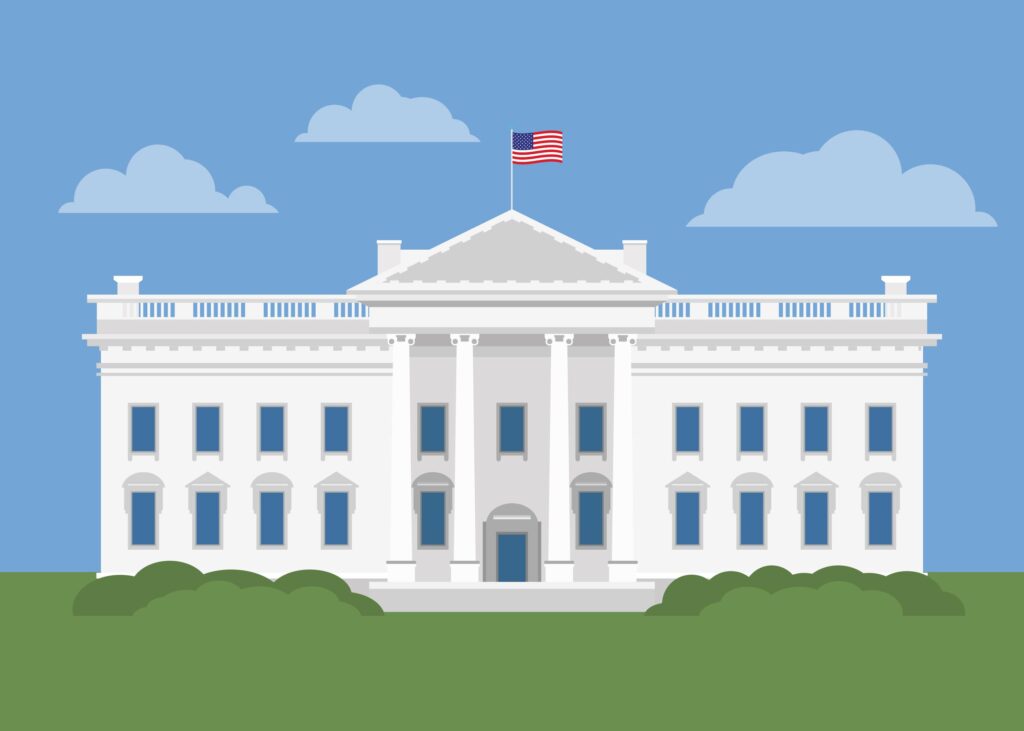
The Super Intelligence executive order signed at the White House on September 29, 2026 tells every federal agency to stop using the term “artificial intelligence” and say “Super Intelligence” instead. On the same day, President Trump and a group of AI company leaders signed a voluntary safety accord, while the public debate about how fast AI should move keeps getting louder. This guide explains what actually happened, how we got here, what the order does and does not change, and what it means for businesses, SEO and AI search visibility, including for companies in Switzerland and the wider DACH region.
What happened on September 29, 2026
According to the official White House fact sheet, President Trump signed an executive order directing the executive branch to replace the terms “Artificial Intelligence” and “AI” with “Super Intelligence” and “SI”. It is one of the most visible terminology changes in the history of US technology policy, and it arrived on a day packed with AI news.
The same afternoon, the president hosted a lunch in the East Room for a large group of technology leaders. AP reported that Nvidia CEO Jensen Huang sat to the president’s right and Elon Musk to his left. Other attendees reported by major outlets included Meta’s Mark Zuckerberg, Anthropic’s Dario Amodei, Google’s Sundar Pichai, Microsoft’s Satya Nadella and OpenAI president Greg Brockman. After the lunch, the group announced a voluntary agreement: the White House Accord on Super Intelligence.
The road to September 29: a timeline of US federal AI policy
The Super Intelligence executive order did not come out of nowhere. Reading the official fact sheet next to the earlier White House releases it links to, you can trace a clear line of federal AI policy over roughly the last 20 months.
- January 2025: within days of the new administration taking office, Executive Order 14179 (signed January 23, 2025) revoked certain Biden-era AI policies and called for a plan to promote AI development. The fact sheet describes this as the start of a new era of innovation.
- July 2025: the White House released America’s AI Action Plan, which the fact sheet says identified more than 90 federal actions on innovation, infrastructure and international leadership.
- November 2025: the Genesis Mission was unveiled as a national effort to use the technology to accelerate scientific discovery. The fact sheet now cites more than $5 billion announced for it.
- March 2026: the White House presented a National Super Intelligence Policy Framework with legislative recommendations.
- June 2026: two further White House actions followed, one on advanced AI innovation and security (June 2) and a directive on AI in the national security enterprise (June 5).
- September 29, 2026: the executive order on terminology and the White House Accord on Super Intelligence.
One detail is worth noticing. The fact sheet already describes these earlier initiatives in the new vocabulary. It says the July 2025 plan was designed to win the “SI race”, even though that plan kept its original title. The rename is retroactive in tone: the administration is presenting one continuous story of American leadership, now under a new name.
The direction of travel across these steps has been consistent, with an emphasis on speed, infrastructure and leadership. ABC News notes that the president has said he opposes guardrails or regulations that would stifle the technology’s growth. The September 29 announcements fit that pattern.
What the Super Intelligence executive order actually does
It is easy to misread a headline like “Trump renames AI”. The Super Intelligence executive order is narrower than that, and the details matter for anyone deciding how to react.
Based on the White House fact sheet, the order does three main things:
- It sets a vocabulary rule for federal agencies. All departments and agencies must use “Super Intelligence” and “SI” in official correspondence, public communications, policy documents and non-statutory documents, and stop acknowledging the terms “Artificial Intelligence” and “AI”.
- It asks for a formal definition. The Assistant to the President for Science and Technology must propose a Federal definition of “Super Intelligence” and identify any further executive action needed to put it in place.
- It frames the change as a statement of ambition. The White House argues that “artificial” implies imitation, while “Super Intelligence” better reflects what the technology can do and keeps agencies focused on expanding its capabilities.
What the order does not do: it does not change any law, it does not bind private companies, and it does not change the words people type into Google or ChatGPT. It governs how federal agencies write and speak. Whether the wider world follows is a separate question, and the honest answer today is that nobody knows yet.
Where the words come from: a short history of AI and superintelligence
To understand why a change of vocabulary is controversial, it helps to know where each term comes from. The story is older than most people think.
- 1955 and 1956: the term “artificial intelligence” was coined by John McCarthy and colleagues in the proposal for the 1956 Dartmouth workshop, widely seen as the founding moment of the field. The White House fact sheet itself refers to more than 70 years of American leadership since the field began.
- 1965: mathematician I. J. Good wrote about an “ultraintelligent machine” able to design even better machines, an idea that became the seed of the modern superintelligence debate.
- 2014: philosopher Nick Bostrom’s book Superintelligence: Paths, Dangers, Strategies brought the term into the mainstream, describing intellects that greatly exceed human cognitive performance in virtually every area of interest.
- 2024: Safe Superintelligence Inc. was founded by Ilya Sutskever, Daniel Gross and Daniel Levy, with the stated mission of building a superintelligence safely.
- 2025: Eliezer Yudkowsky and Nate Soares published If Anyone Builds It, Everyone Dies on September 16, 2025, arguing that superhuman AI poses an existential risk. It became one of the most discussed books on the subject.
Researchers and companies often use a three-step shorthand to describe the range of possible systems:
Narrow AI
Systems built for specific tasks such as translation, image recognition, recommendations or customer support.
AGI
Artificial general intelligence: hypothetical systems that match human ability across most cognitive tasks.
ASI
Artificial superintelligence: hypothetical systems that exceed human ability across the board.
This is why the federal rename draws attention. In this common vocabulary, superintelligence sits at the far end of the scale, above human-level ability. The White House says the new name reflects the true capabilities of the technologies being developed today. Under the stricter research meaning, however, superintelligence describes a level of capability that has not been demonstrated. The proposed federal definition that the science adviser must now deliver will show how the government intends to draw that line.
The White House Accord on Super Intelligence
The accord is the second half of the story, and arguably the more consequential one for the industry. ABC News reported that the document is titled “The White House Accord on Superintelligence: A Joint Commitment on Frontier SI Responsibilities”. Outlets spell the name both as “Super Intelligence” and “Superintelligence”, which is already a small SEO lesson we return to below. ABC described the version Trump shared as thin on details, so it is worth reading the full accord document (PDF, hosted by PBS) yourself.
Here is what the reporting tells us about it:
- It is voluntary. House Speaker Mike Johnson described the commitments as voluntary on behalf of the industry, and Trump said the companies will police themselves. Asked whether it is binding, he called it “morally binding”, as CBS News reported.
- It includes reviews. AP reported that the accord will include internal and external reviews of the technology.
- It leaves the door open to law. ABC News reported that the accord recognizes these steps are not codified into law or regulation, but leaves open that possibility for the future.
- It puts responsibility on each company. CNBC reported that the text says every company is responsible for developing its own technology safely and in a way that builds trust.
- More governance is coming. Trump said the leaders discussed a 10-person committee to oversee the industry, and that he plans to name an “AI czar” within three or four days.
- Data centers were on the table. Trump said executives agreed to help local communities, for example by supporting schools or reducing energy costs, in response to bipartisan, grassroots opposition to new data centers in local communities, as AP reported.
Self-regulation versus binding rules: both sides of the argument
The accord puts a long-running argument back in the spotlight: should the companies building the most powerful systems regulate themselves, or should governments set binding rules? Both sides have serious arguments, and it is worth stating them fairly.
The case for voluntary commitments
- Speed and flexibility. Voluntary standards can be updated faster than legislation, which matters in a field where capabilities change every few months.
- Competition. CNBC reports that the president insists beating China in the race for AI dominance is an all-important goal. Supporters of light-touch policy argue that heavy rules could slow US companies down.
- Existing oversight still applies. Trump said the industry is also covered by existing enforcement through bodies such as the Department of Justice and the FBI.
- Technical expertise. The people building the systems understand them best and can respond quickly when problems appear.
The case for binding rules
- Enforcement. Voluntary commitments depend on goodwill. The president himself described the accord as morally, not legally, binding.
- Public concern. Polls cited by CNBC show majorities of Americans are worried about AI.
- Concern inside the industry. Some executives, including Anthropic’s Dario Amodei, have called for slowing development. That shows worry is not limited to outside critics.
- The accord’s own wording. By acknowledging that codifying the steps into law may make sense over time, the text itself accepts that voluntary standards may not be the end state.
Our role here is not to pick a side. For businesses, the practical point is that the regulatory picture is unsettled. Anything you build that depends on a single interpretation of future AI rules carries risk, so it pays to stay flexible and informed.
Why the timing matters: the slow-down debate
The accord did not appear in a vacuum. AP noted that Trump’s enthusiasm for AI contrasts with alarms sounded recently by some AI executives, including Amodei, who earlier this month called on leading firms to slow down development. Musk and OpenAI CEO Sam Altman also called for letting safety measures catch up, according to the same AP report, while other executives, particularly Huang and Zuckerberg, have downplayed concerns about runaway AI and stressed each company’s responsibility for its own products. In other words, the industry is not speaking with one voice.
Public opinion adds another layer. CNBC noted that multiple recent polls show majorities of Americans concerned about AI and disapproving of how the president has handled the issue. So the same day combined three forces: an administration pushing for speed, industry leaders publicly debating restraint, and a public that is uneasy.
The criticism: does the new name blur the risk debate?
Critics argue that the rename creates confusion rather than clarity. Brendan Steinhauser, CEO of the Alliance for Secure AI, told The Daily Signal that he worries the term muddies the distinction between everyday AI tools and true super intelligence.
That distinction is real. In research and safety circles, superintelligence has a specific meaning: a system that surpasses human intelligence across the board. Applying the same word to today’s chatbots and automation tools stretches it. CNBC also pointed out that the accord itself makes no declaration about a name change and only uses the new term in its title.
For readers, journalists and AI systems trying to make sense of this, the practical result is three overlapping terms that now circulate at the same time:
AI / artificial intelligence
The everyday term used by the public, media, businesses and most of the world. It is not going away.
Super Intelligence (SI)
The new official term for US federal agencies as of September 29, 2026, covering the technology broadly.
Superintelligence
The research term for hypothetical systems that surpass human intelligence. Its meaning is stricter than the federal usage.
Does the Super Intelligence executive order change how people search?
This is the question we get from clients, so here is our honest assessment. Search behavior follows habit, not decree. Most people will keep typing “AI” into Google, and most businesses will keep describing their products as AI-powered. The Super Intelligence executive order is unlikely to change that in the near term.
What it will change is news-driven search demand. Expect a burst of informational queries around topics such as:
- “Super Intelligence executive order” and “Trump renames AI”
- “White House Accord on Super Intelligence” and its spelling variants
- “AI vs super intelligence” and “what is super intelligence”
- “AI czar” and “AI self-regulation accord”
These are definitional, high-curiosity searches, the kind that reward clear, well-sourced explainer content. They are also the kind of questions people now ask ChatGPT, Gemini and Perplexity directly. If you want context on how large that shift is, see our collection of SEO and AI search statistics for 2026.
One caution: we do not yet have search volume data for these terms, and anyone quoting precise numbers this early is guessing. The sensible approach is to watch Google Trends and your own Search Console queries for a few weeks before changing any keyword strategy.
What past rebrands teach us about search behavior
History offers a useful reference. When companies and institutions rename themselves, official naming and everyday language drift apart for a long time. When Twitter became X in 2023, many people, including journalists, kept using the old name in conversation and in search long afterwards. When Facebook’s parent company became Meta in 2021, “Facebook” remained the word most people used for the product. Official names change on a press-release schedule. Habits change on a human one.
The lesson for search is consistent: the query people type is the word they already know. Rebrands usually leave the old term as the main search term, while the new term grows slowly and mostly among people who follow the news closely. The AI to SI change is likely to be even more uneven, because the order applies only to one government’s agencies, while the rest of the world, including other governments, continues to say “AI”.
Two practical implications follow:
- Cover both terms. Content that explains the relationship between the old and new term can capture traffic on both, and it is exactly the kind of clarity AI systems look for.
- Do not abandon what works. A site that swaps its vocabulary overnight risks losing pages that match what people actually type. Add the new term alongside the old one instead of replacing it.
What this means for AI search and GEO
When a term is new, contested and used in three different ways, AI systems need help. They look for sources that define the terms clearly, keep them consistent and link to primary documents. That is exactly where GEO, or Generative Engine Optimization, comes in.
Pages that tend to be cited in AI answers about fast-moving topics share a few habits: they answer the main question in the first lines, they state facts with dates, they cite official sources, and they separate what is confirmed from what is speculation. This article follows that structure on purpose.
The same logic applies to your own website. If your business sells anything AI-related, or advises clients on it, a short, clear explanation of how you use these terms builds trust with readers and gives AI systems a reliable definition to quote.
Not sure whether your business appears in ChatGPT, Gemini or Perplexity answers? Our free audit checks your SEO foundation and your AI search visibility in one review.
Get Your Free Audit →How AI systems handle a term that changed overnight
There is a technical detail that most coverage misses. AI assistants gain knowledge in two ways: from training data collected up to a cutoff date, and, in many products, from live web search at the moment you ask a question.
- Training cutoffs. A model whose training ended before September 29, 2026 has no built-in knowledge of the executive order or the accord. It can only learn about them through live retrieval.
- Live retrieval. Search-connected assistants such as ChatGPT search, Perplexity and Google’s AI Overviews pull from current web sources. For a topic this fresh, the clarity and recency of sources decide who gets cited.
- Ambiguous terms. For a term with three overlapping meanings, retrieval systems tend to favor pages that state the differences explicitly, in short definitional passages that can be lifted into an answer.
- Early inconsistency. Expect early AI answers to mix up the terms. Some will describe the order accurately, others will confuse Super Intelligence with superintelligence. That inconsistency is an opening for accurate, well-structured sources.
The takeaway is simple. On breaking topics, the model is not the only decision maker. The sources it can find decide the answer, and those sources are written by people and companies willing to publish clear, accurate explanations quickly.
How to write for AI search on breaking news: a six-part playbook
Whether you are covering this story or any future news in your industry, the same playbook applies. It is the approach we use for our own content and for clients.
1. Answer first
Put the core fact and the date in the opening lines. A reader, and an AI system, should know within seconds what happened, when and why it matters.
2. Cite primary sources
Link the original document and reputable outlets, as this article does with the White House fact sheet and major news organizations. Primary sources signal reliability and make your claims checkable.
3. Separate facts from analysis
Label what is confirmed, what is claimed by a party, and what is your own interpretation. This protects your credibility and helps AI systems quote the right kind of statement.
4. Define every term once, clearly
Use a short definition block or glossary for contested vocabulary. Definitions are among the most frequently extracted passages in AI answers.
5. Add structured data
Use Article or NewsArticle schema with datePublished and dateModified, and FAQPage schema for question-and-answer sections. Structured data makes the page easier for search engines and AI systems to interpret. Our SEO service covers this as part of the technical foundation.
6. Keep it updated, visibly
For a developing story, show a clear last-updated note and revise the article as facts change. A corrected, current article beats a fast but outdated one. Speed matters, since the first well-structured explainer often becomes the page others link to, but accuracy matters more.
Finally, remember the trust layer. Named authors or a visible editorial team, a real about page and consistent organization details all support the signals AI systems and search engines use to decide whether a source is credible.
Six practical steps for businesses after the Super Intelligence executive order
- Do not rebrand your website or products. The order covers federal agencies only. Your customers still say “AI”, so keep using the word they use.
- Add a short glossary or FAQ. Define AI, Super Intelligence and superintelligence in plain language, with links to primary sources. It serves readers and AI systems at the same time.
- Monitor before you act. Track the new terms in Google Trends and Search Console for 30 days before adjusting keyword targets.
- If you sell to US federal agencies, mirror their vocabulary. Procurement and policy documents may start using “Super Intelligence” and “SI”, so mention both terms in proposals and capability statements.
- Follow the governance timeline. The accord is voluntary today, but the named AI czar, the proposed oversight committee and the federal definition are the developments to watch.
- Check your AI visibility. Ask ChatGPT, Gemini and Perplexity the questions your customers ask, and see whether your brand appears in the answers.
What different types of businesses should do
Not every business needs to react in the same way. Here is how we would prioritize by type.
Local service businesses
Plumbers, cleaners, restaurants, movers and similar businesses are barely affected. Do not spend budget on this. Keep your focus on your Google Business Profile, reviews, local citations and clear service pages. If you mention AI tools anywhere on your site, keep the word “AI”.
Software, SaaS and AI vendors
Your customers search for “AI”, so keep it in titles, headings and product descriptions. Add the federal term in a glossary or dedicated page, especially if you target government buyers. Watch the proposed federal definition, since it may influence how buyers describe the technology they want to purchase.
Government contractors and consultants
The fact sheet says agencies will use the new terms in official correspondence, public communications and policy documents. Mirror that language in proposals and capability statements while keeping the familiar term alongside it, and monitor the definition the science adviser is asked to propose.
Agencies, publishers and consultants
This is an opportunity for explainer content, client briefings and monitoring services. Publish clear definitions, keep a visible update log, and help clients understand what changes and what does not. Being accurate and early builds authority that lasts well beyond one news cycle.
Ecommerce brands selling AI-branded products
Keep your product names and listings as they are. If it genuinely helps customers, mention both terms in descriptions or FAQs, but do not rename products because of a federal vocabulary rule.
Three scenarios for what happens next
Nobody can predict this precisely, so we prefer scenarios to forecasts. Each has different consequences for search and for business.
Scenario 1: the term stays inside government
Federal documents change, while media and the public keep saying “AI”. The effect on search is minimal, apart from a niche of policy-related queries. Businesses barely need to adapt.
Scenario 2: the term spreads through media and business
Political and business coverage in the US adopts “Super Intelligence” partially. Searches for the term grow, and the ambiguity with the research meaning of superintelligence deepens. Definitional content becomes valuable, and keyword strategy should include both terms.
Scenario 3: the federal definition becomes a reference point in rules
If the definition proposed by the science adviser is used in future regulation, procurement or legislation, businesses in scope will need to understand it precisely. Demand for compliance-focused content and B2B guidance would grow.
The milestones to watch are the naming of the AI czar, the creation of the proposed oversight committee, the text of the federal definition, and whether other outlets and governments follow the new vocabulary. We will update this article as those events arrive.
What this means outside the US: Switzerland, the DACH region and Kosovo
For readers in Switzerland, Germany, Austria and Kosovo, the first question is whether any of this applies to them. Directly, it does not. The order governs US federal agencies. The EU AI Act and the Council of Europe’s Framework Convention on Artificial Intelligence both use “artificial intelligence” in their names, and nothing in the US order changes that.
Language adds another wrinkle. In German the terms are Künstliche Intelligenz (KI) and Superintelligenz. In Italian they are intelligenza artificiale and superintelligenza. The American distinction between “AI” and “Super Intelligence” does not map cleanly onto these languages, and a literal translation could import the ambiguity. If you publish in several languages, define the terms in each language instead of translating a headline word for word.
For companies that trade with the US, the practical point is awareness. Swiss and DACH businesses that supply US federal agencies or large US contractors may encounter the new vocabulary in tenders and contracts, so it is worth understanding. For everyone else, the priorities have not changed: strong SEO foundations, clear content, and visibility in AI search, where more of your future customers are starting their research.
Key takeaways
- The Super Intelligence executive order, signed September 29, 2026, directs US federal agencies to use “Super Intelligence” and “SI” instead of “AI” in official documents and communications.
- It applies to the executive branch only. It does not change any law, bind private companies or alter what the public types into search engines.
- The White House Accord on Super Intelligence is voluntary. The president called it “morally binding”, and the text acknowledges that codifying the steps into law may make sense over time.
- A federal definition of “Super Intelligence” is coming from the White House science adviser, and an AI czar is expected to be named within days.
- Critics say the rename blurs the line between everyday AI tools and true superintelligence, a term with a stricter research meaning.
- Do not rebrand. Cover both terms, define them clearly, and monitor real search data before changing keyword strategy.
- For AI search visibility, clear definitions, primary sources, structured data and visible updates are what get pages cited.
Frequently asked questions about the Super Intelligence executive order
What is the Super Intelligence executive order?
It is an executive order signed by President Trump on September 29, 2026 that directs federal departments and agencies to use the terms “Super Intelligence” and “SI” instead of “Artificial Intelligence” and “AI” in official communications and documents. It also asks the White House science adviser to propose a federal definition of the new term.
Does the executive order ban the term AI?
No. The order applies to the executive branch. It does not apply to private companies, the media, Congress or the public, and it does not change any law. Businesses and individuals can keep using “AI” as before.
What does SI stand for?
SI stands for Super Intelligence. Under the order, federal agencies are to use “SI” as the short form in official documents, in the same way “AI” was used before.
Is the White House Accord on Super Intelligence legally binding?
No. Officials described it as a voluntary set of principles and commitments for the AI industry. President Trump called it morally binding. The text reportedly acknowledges that it may make sense to codify the commitments into law over time.
Who attended the White House AI lunch?
A large group of technology leaders attended. Reported attendees include Nvidia CEO Jensen Huang, Elon Musk, Meta CEO Mark Zuckerberg, Anthropic CEO Dario Amodei, Google CEO Sundar Pichai, Microsoft CEO Satya Nadella, Amazon founder Jeff Bezos and OpenAI president Greg Brockman, along with House Speaker Mike Johnson and members of the Cabinet.
Is Super Intelligence the same as superintelligence?
Not exactly. In research and safety discussions, superintelligence refers to hypothetical systems that surpass human intelligence broadly. The federal “Super Intelligence” label is used for advanced AI technology in general. Critics say this blurs an important distinction.
Who is the AI czar?
As of September 30, 2026, no one has been named. President Trump said he plans to name an “AI czar” within three or four days. We will update this article when the appointment is announced.
What is the Genesis Mission?
The Genesis Mission is a national effort, announced in November 2025, to harness advanced AI to accelerate breakthroughs in science, medicine, energy and manufacturing. The White House fact sheet says more than $5 billion has been announced for it.
Will other countries adopt the term Super Intelligence?
There is no sign of that so far. The order covers only US federal agencies. The EU AI Act and the Council of Europe’s Framework Convention on Artificial Intelligence continue to use “artificial intelligence” in their names.
Should my business change “AI” to “Super Intelligence” on its website?
No. Your customers and search engines still use “AI”. Consider adding a short explanation of the new terminology, and only adopt the federal term prominently if you work directly with US government agencies.
Will the Super Intelligence executive order affect SEO?
Not directly. Search behavior follows how people actually talk, and that has not changed. You should expect a temporary spike in news-related and definitional searches, which creates an opportunity for clear, authoritative explainer content. Monitor real data before changing your keyword strategy.
How can my business appear in AI answers about topics like this?
Publish answer-first content with dated facts, cite primary sources, define contested terms, add structured data such as Article and FAQPage schema, and keep the page visibly updated. Strong foundations in traditional SEO also matter, because AI search systems rely on the same web sources. Our GEO service integrates these steps into a systematic strategy.
Sources
- The White House: Fact Sheet on the Era of Super Intelligence
- ABC News: Trump says AI leaders signed a “constitution” to police themselves
- CBS News: Trump and major AI executives sign voluntary controls
- PBS NewsHour / AP: Trump announces accord to self-police development
- The White House Accord on Super Intelligence, full document (PDF, hosted by PBS)
- CNBC: Trump tries to rename AI “super intelligence”
- The Daily Signal: Trump says he will sign order renaming AI
Why BeeDynamic follows AI policy news
BeeDynamic is a certified Google Partner digital agency that helps businesses in Switzerland, the DACH region, Kosovo and the United States rank on Google and appear in AI search results. We follow AI policy closely because it shapes how people find information, which terms they use, and which sources AI systems trust.
Learn more about our SEO services and our GEO and AI search visibility services, or start with a free review of where your business stands today.
Want your business to be the source AI systems cite?
Start with a free audit. We review your SEO foundation, your content structure and your visibility across Google, ChatGPT, Gemini and Perplexity. No commitment, no long-term contracts.
Get Your Free Audit → See GEO ServicesSEO and GEO specialists serving businesses across Switzerland, the DACH region, Kosovo, Albania and the US. Certified Google Partner. Last updated September 30, 2026.